
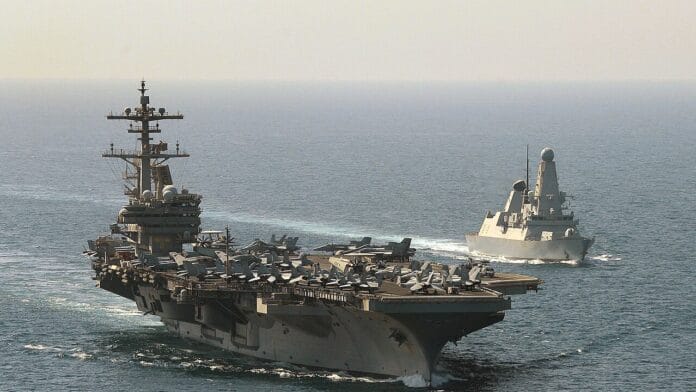
The United States is considering sending three additional warships and thousands of troops to the Middle East as the war with Iran enters a more dangerous phase. The move comes as Donald Trump publicly attacked NATO allies, calling them “cowards” for refusing to help reopen the Strait of Hormuz.
According to reports published on Friday, Washington is also weighing more aggressive scenarios involving Iran’s Kharg Island, a critical hub for the country’s oil exports. Reuters reported on March 18 that the US is reviewing military reinforcements as the conflict shifts into a new stage, while other outlets say Kharg Island is among the options under discussion.
The confrontation is closely tied to the Strait of Hormuz, a vital corridor for global energy trade. The Associated Press has reported that roughly one-fifth of the world’s seaborne oil shipments passed through the route before the latest escalation, highlighting why markets are highly sensitive to any military developments in the area.
Trump has also escalated rhetoric toward Western partners. Reuters reported that European leaders have refused to join the US-Israel war against Iran, demanding clarity on Washington’s objectives and viewing the conflict as a largely unilateral move. NATO has also made clear it will not take part in such a mission.
At the same time, threats from Tehran are intensifying. Iranian state media cited military spokesperson Abolfazl Shekarchi warning that US and Israeli officials and commanders would be pursued “wherever they are,” including in tourist locations. The remarks signal a shift beyond conventional warfare and raise fears of asymmetric attacks outside the region.
Trump, meanwhile, has ruled out an immediate ceasefire. According to recent reports, he said he does not want a ceasefire while the opposing side is being “obliterated,” suggesting Washington is not signaling de-escalation but leaving the door open for further military expansion.
The risks now extend beyond the battlefield. The Washington Post reports that the three-week conflict has already pushed oil prices higher, disrupted maritime routes and triggered debate within the US over the strategic and economic cost of the war. If Hormuz remains blocked and US military presence expands, the impact could quickly hit global markets, fuel prices and supply chains.