
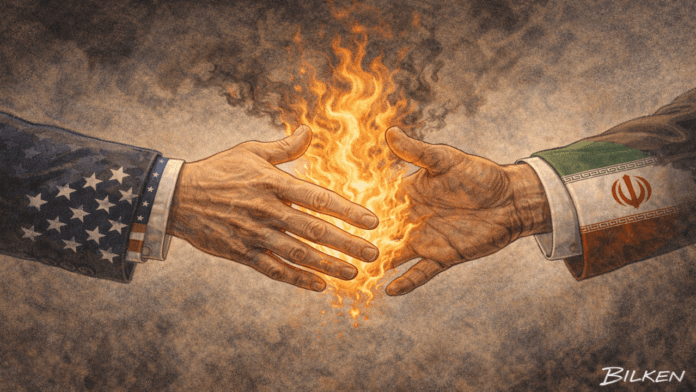
The collapse of talks between the United States and Iran after just one day has raised serious questions about the future strategy of the administration of Donald Trump, amid the risk of renewed escalation and pressure to continue diplomacy.
Negotiations in Islamabad, mediated by Pakistan, ended without an agreement after around 21 hours of intensive discussions, leaving the fate of a temporary ceasefire and regional stability uncertain.
According to US officials, the main sticking point remains Iran’s nuclear program and Tehran’s refusal to provide long-term guarantees that it will not develop nuclear weapons.
On the other hand, Iranian media has accused the United States of making excessive demands and showing a lack of flexibility.
The US administration now appears to face two paths: increase military pressure or return to the negotiating table.
In recent days, rhetoric from Washington has hardened. Trump has warned of strong measures, including the possibility of a naval blockade in the Strait of Hormuz, a critical route for global oil trade.
Reports also suggest that the US has prepared military options in case diplomacy fails entirely.
However, this is not the first time the Trump administration has combined military pressure with offers of negotiation. In recent months, the US president has alternated between threats of strikes and statements about a possible deal, reflecting a so-called “maximum pressure” strategy.
At the same time, a lack of trust remains a major obstacle. Iranian officials have stated that the United States failed to gain the confidence of their delegation during the talks, suggesting that the gap between the two sides goes deeper than technical issues.
The implications are wide-ranging. A renewed escalation could threaten not only the region but also global energy markets, given the critical role of the Strait of Hormuz. Any disruption in this corridor could directly impact oil prices and the global economy.
On the other hand, a return to negotiations remains possible, but difficult. The history of US–Iran relations shows that dialogue is often fragile and frequently interrupted by mistrust and maximalist demands from both sides.
For now, the direction remains unclear. Trump may choose to increase pressure to force concessions from Iran, or keep diplomatic channels open to avoid a broader conflict.
What is clear is that the failure of this round of talks is not the end of the story, but a turning point that could lead either to a new agreement or to a more serious confrontation.