
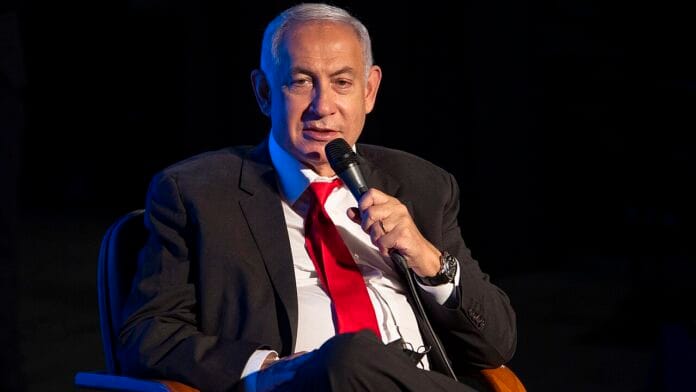
Israeli Prime Minister Benjamin Netanyahu has said there will be no ceasefire in Lebanon, vowing to continue military operations against Hezbollah with what he described as “full force,” according to a video statement released on social media.
In the address, published on Thursday, Netanyahu indicated that Israeli strikes would persist until security conditions improve, stating that operations would not stop “until we restore your security.” The remarks come amid ongoing regional tensions and uncertainty over broader ceasefire efforts.
The Israeli government has maintained that a recently discussed two-week truce between the United States and Iran does not extend to Lebanon. Officials in Tel Aviv have repeatedly argued that Hezbollah remains an active threat, and that military action is necessary to limit its capabilities along Israel’s northern border.
According to reports, the Israeli military launched one of its most extensive waves of air strikes in the conflict so far earlier this week. Local sources and regional media say the attacks resulted in significant casualties, with more than 300 people reported killed. These figures have not been independently verified, and details on the breakdown of civilian and combatant casualties remain unclear.
The escalation follows a period of heightened cross-border exchanges between Israeli forces and Hezbollah fighters. The Iran-backed group, which operates in southern Lebanon, has been involved in repeated clashes with Israel in what analysts describe as a volatile and expanding front in the wider Middle East crisis.
Netanyahu’s latest comments suggest Israel is preparing for a sustained campaign rather than a short-term operation. His insistence on continuing strikes, even as diplomatic efforts unfold elsewhere in the region, highlights the fragmentation of ceasefire initiatives and the difficulty of aligning multiple conflict zones under a single agreement.
At the same time, the Israeli leader signaled a potential diplomatic track, stating that he had instructed his government to open direct negotiations with Lebanon “as soon as possible.” According to his remarks, any such talks would focus on disarming Hezbollah and establishing what he described as more stable and peaceful relations.
It remains unclear how feasible these negotiations would be. Hezbollah holds significant political and military influence within Lebanon, and any effort to disarm the group would likely face internal resistance as well as broader regional implications. Lebanese authorities have not yet publicly responded to Netanyahu’s proposal.
Observers note that Israel’s dual approach—continuing military pressure while proposing negotiations—reflects a strategy aimed at reshaping security arrangements along its northern frontier. However, the success of such an approach may depend heavily on developments on the ground and the positions of key regional actors, including Iran.
The situation also raises concerns about further escalation. With strikes intensifying and diplomatic channels uncertain, the risk of a wider confrontation remains present. Analysts warn that miscalculation or continued retaliatory actions could draw additional actors into the conflict.
For now, there is little indication that hostilities will ease in the short term. Netanyahu’s statement reinforces the likelihood of continued military activity in Lebanon, even as broader efforts to stabilize the region continue to face significant challenges.