
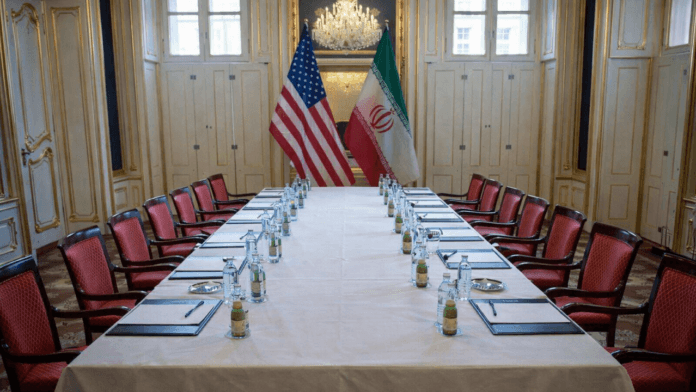
Iran has suspended planned negotiations with the United States, citing ongoing Israeli strikes in Lebanon as a key reason for halting diplomatic engagement, according to Iranian state-linked media and regional reports.
The talks, which were expected to take place at a hotel venue in Islamabad, Pakistan, had been presented as a potential step toward easing tensions between Tehran and Washington. However, Iranian outlets, including those close to the Islamic Revolutionary Guard Corps, indicated that the discussions have now been put on hold.
Iranian news agency Tasnim and other affiliated outlets rejected claims circulating in some international media that an Iranian delegation had already arrived in Pakistan. According to these reports, no official representatives have yet departed Tehran for the anticipated negotiations.
Al Jazeera similarly reported that the Iranian delegation has not left the country, citing ongoing Israeli military activity in Lebanon as a central obstacle. Iranian officials have reportedly made clear that as long as these operations continue, diplomatic talks with the United States are unlikely to proceed.
Details surrounding the suspension remain limited, and there has been no immediate confirmation from US officials regarding the status of the talks. It also remains unclear whether the pause is temporary or indicative of a broader breakdown in communication channels between the two sides.
The development comes amid heightened regional tensions, with Lebanon once again emerging as a flashpoint in the wider Middle East conflict. Israel has continued military operations targeting positions it says are linked to Hezbollah, the Iran-backed group that operates in southern Lebanon.
Tehran has long positioned itself as a key supporter of Hezbollah, both politically and militarily, and has frequently warned that continued Israeli actions in Lebanon could have broader regional consequences. Analysts say Iran’s decision to suspend talks may be intended to increase diplomatic pressure while signaling its alignment with allied groups in the region.
At the same time, reports suggest that disagreements over the framework of a proposed agreement may have also contributed to the delay. According to sources cited by regional media, the United States had introduced revisions to a previously discussed 10-point plan that had earlier been described as workable.
While the contents of the revised plan have not been made public, such changes are believed to have complicated the negotiation process. Observers note that even prior to the latest developments, talks between the two countries were already facing significant hurdles due to longstanding mistrust and diverging strategic interests.
The pause in negotiations raises questions about the immediate prospects for de-escalation. Diplomatic efforts in recent weeks had focused on establishing a limited framework to reduce tensions, particularly in relation to regional flashpoints such as Lebanon and the Strait of Hormuz.
However, with fighting continuing on multiple fronts and key actors maintaining firm positions, the likelihood of a quick return to talks appears uncertain. Some analysts warn that prolonged delays could increase the risk of further escalation, especially if communication channels remain inactive.
There has also been no clear indication of whether third-party mediators, including Pakistan, will attempt to revive the dialogue. Islamabad had been seen as a potential neutral venue for discussions, but the current situation may complicate those efforts.
For now, the situation underscores the fragile nature of diplomatic engagement in a region where military developments can rapidly reshape political calculations. With no confirmed timeline for resuming talks, attention is likely to shift toward developments on the ground and any signals from Washington or Tehran regarding their next steps.