
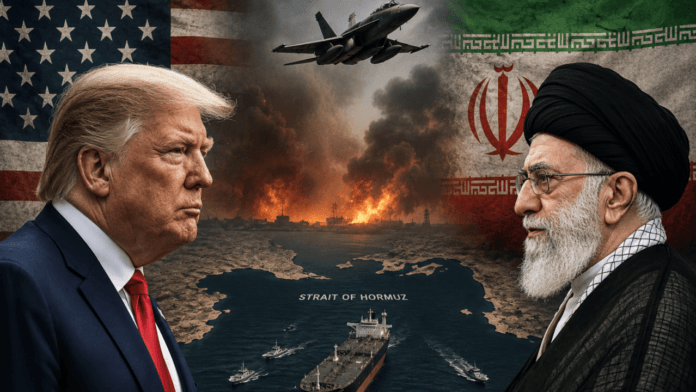
Tensions between the United States and Iran are entering a new and uncertain phase despite a fragile ceasefire that has reportedly held for the past month.
Just hours before a scheduled meeting between Donald Trump and Xi Jinping in Beijing, senior Iranian officials warned Washington against viewing the current pause in fighting as either a diplomatic or military victory.
According to statements carried by Iranian state-linked media, Ali Akbar Velayati, a senior adviser to Iran’s Supreme Leader, directly criticized Trump and accused the United States of miscalculating Iran’s position.
“Do not imagine that by taking advantage of Iran’s current calm you will enter Beijing in triumph,” Velayati reportedly said, according to the Iranian news agency Tasnim. He further claimed Iran had “defeated” the United States on the battlefield and warned Washington not to assume it would prevail diplomatically.
The latest escalation comes after the White House reportedly rejected a counterproposal submitted by Tehran aimed at ending hostilities and reopening the strategically vital Strait of Hormuz.
Speaking from the Oval Office, Trump described the ceasefire as being “on oxygen support” and compared the situation to a critically ill patient with minimal chances of survival.
“I would say the ceasefire is on oxygen,” Trump told reporters. “When the doctor walks into the room and says your loved one has a one percent chance of surviving.”
The US president also accused Iran’s leadership of acting dishonestly and said Tehran continued to change its position during negotiations.
In a post published on Truth Social, Trump reportedly called Iran’s latest proposal “completely unacceptable” and dismissed it as “garbage”.
At the center of the dispute is Iran’s nuclear program and Washington’s demand that Tehran allow the removal of enriched uranium stockpiles from the country. Trump insisted Iran “will never have a nuclear weapon,” while Iranian sources denied that any proposal included transferring nuclear material abroad.
According to Tasnim, Tehran’s proposal included several key demands: an immediate end to military operations on all fronts, the lifting of the US naval blockade on Iranian ports, guarantees against future attacks, compensation for war damages and recognition of Iranian sovereignty over the Strait of Hormuz.
Iranian officials also linked the proposal to continued Israeli military operations against Hezbollah in Lebanon, suggesting broader regional de-escalation would be required for any long-term agreement.
Iranian Foreign Ministry spokesman Esmail Baghai described Tehran’s proposals as “responsible” and “generous”, while warning that Iran would defend its interests “by any necessary means”.
Meanwhile, Iranian Parliament Speaker Mohammad Bagher Ghalibaf said the United States had no better alternative than accepting Tehran’s 14-point proposal.
“There is no alternative other than recognizing the rights of the Iranian people,” Ghalibaf wrote on X, warning that any other approach would fail and impose greater costs on the United States.
He also warned that Iranian armed forces were fully prepared to respond to any future aggression.
Despite the increasingly hostile rhetoric from both sides, it remains unclear whether either Washington or Tehran is prepared to fully abandon negotiations. Analysts say the situation around the Strait of Hormuz remains especially sensitive given its importance to global oil markets and international shipping.