
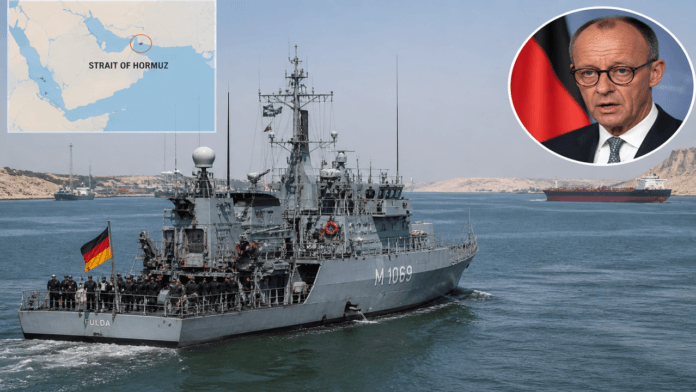
Friedrich Merz has said Germany is prepared to contribute to efforts aimed at securing stability in the Strait of Hormuz, as Berlin moves a specialised naval vessel closer to the region, according to German media reports.
The German navy has dispatched the mine countermeasure vessel Fulda from its base in Kiel-Wik on the Baltic Sea. The ship is expected to join a NATO mine countermeasure group in the Mediterranean, positioning it nearer to a potential deployment zone should an international mission be launched.
Officials have not confirmed any immediate deployment to the Strait of Hormuz, and details of a possible mission remain unclear. However, the move is widely seen as a preparatory step, allowing Germany to respond quickly if required.
The development comes amid heightened tensions involving Iran. Since late February, reports have suggested disruptions in the strategic waterway, a key global energy corridor. Claims that the strait has been mined have circulated, although these have not been independently verified.
Speaking in a televised interview on ARD’s “Caren Miosga”, Merz said Germany was closely monitoring the situation and remained ready to assist. “This conflict has significant consequences for us. We want to see it end, and we are prepared to offer support,” he said, referring to ongoing tensions linked to Iran.
He stressed that any German involvement would depend on the broader geopolitical context, indicating that Berlin’s role would likely come after a de-escalation or conclusion of hostilities.
The Strait of Hormuz is one of the world’s most critical maritime chokepoints, through which a significant share of global oil supplies passes. Any disruption to shipping in the area has immediate implications for energy markets and international trade.
Germany’s navy is considered one of the more capable forces within NATO when it comes to mine countermeasure operations. Since the end of the World War II, it has built extensive experience in detecting and neutralising naval mines, particularly in the Baltic Sea.
The fleet currently operates several specialised mine-hunting vessels equipped with advanced underwater drones and supported by trained divers. This expertise is regarded as a relatively scarce capability within NATO, making Germany a valuable contributor to any future maritime security mission.
While no formal mandate has yet been announced, analysts say positioning assets early provides flexibility as the situation evolves. For now, Berlin appears to be balancing readiness with caution, signalling willingness to act without committing to a direct role in an active conflict zone.