

When a military mission fails, the consequences are immediate and unforgiving. Aircraft go down. Units become isolated. Communication is lost. At that point, modern warfare strips away its technological advantage. What remains is the individual. For the United States military, this scenario is not theoretical. It is anticipated. And the system designed to deal with it is known as SERE.
Short for Survival, Evasion, Resistance, Escape, SERE is one of the most demanding and psychologically intense training frameworks in the US armed forces. Its purpose is not to improve battlefield performance, but to prepare personnel for what happens after everything has gone wrong.
Built from Cold War realities
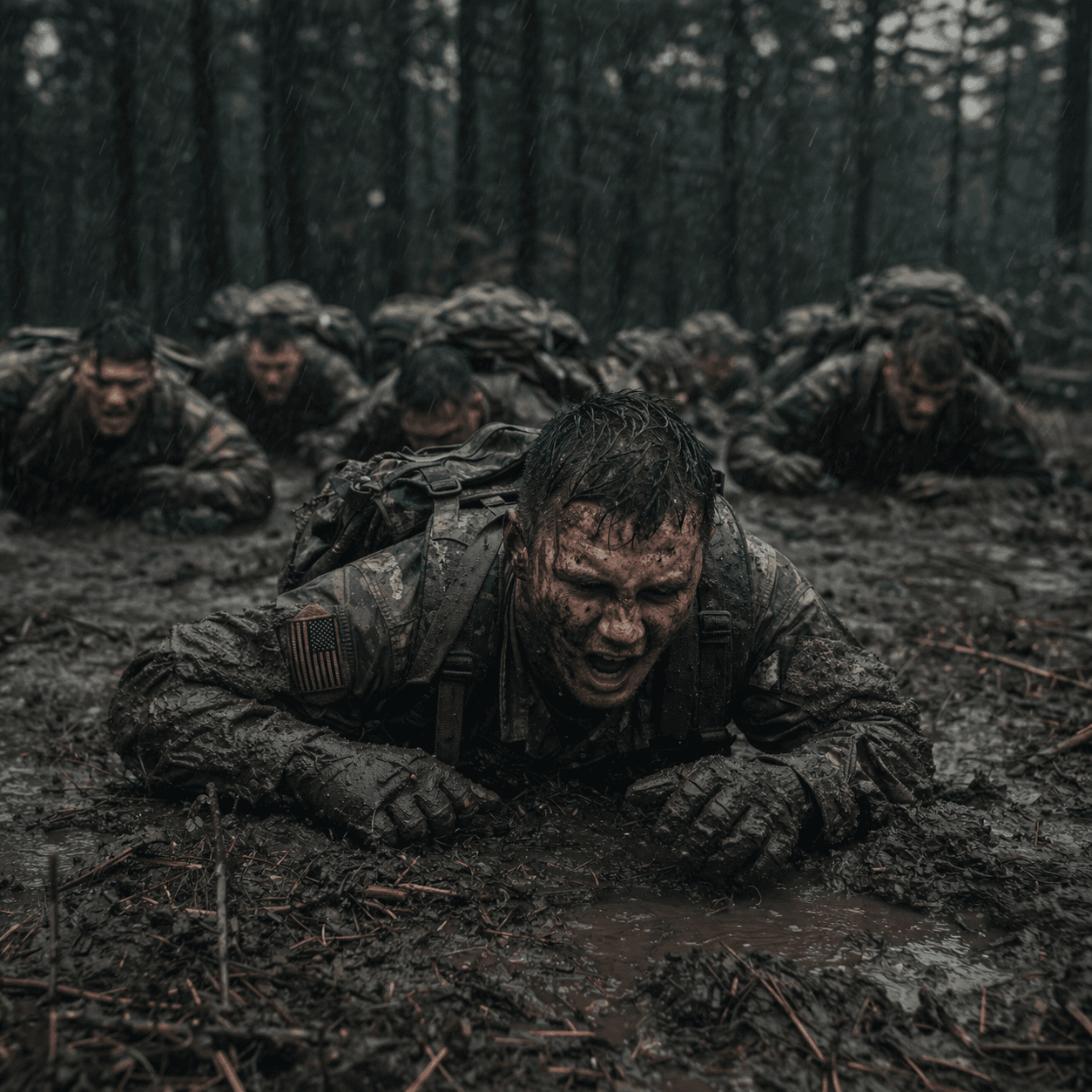
The origins of SERE trace back to the Cold War, when American pilots faced a growing risk of capture in hostile territories. Incidents involving prisoners of war revealed a critical gap. Survival alone was not enough. Personnel needed to know how to resist interrogation and maintain operational integrity under extreme pressure.
Over time, SERE evolved into a structured training system used across multiple branches of the military, including the United States Air Force, United States Navy, United States Army, and United States Marine Corps. Today, it is no longer limited to pilots. It is a core capability for any role that carries a risk of isolation or capture
Not just for pilots
Aircrews remain among the most vulnerable. A downed aircraft can leave a pilot alone, injured, and deep inside hostile territory within seconds. But SERE is far broader in scope. Elite units such as the Navy SEALs, Green Berets, and Delta Force undergo the most advanced versions of the training. These forces operate in small teams, often without immediate extraction capability. If compromised, they must rely entirely on their own training.
Conventional troops are also exposed, though to a lesser extent. As a result, SERE is delivered in different levels, ranging from basic survival awareness to full-scale resistance and escape training.
Survival: the first and most basic requirement
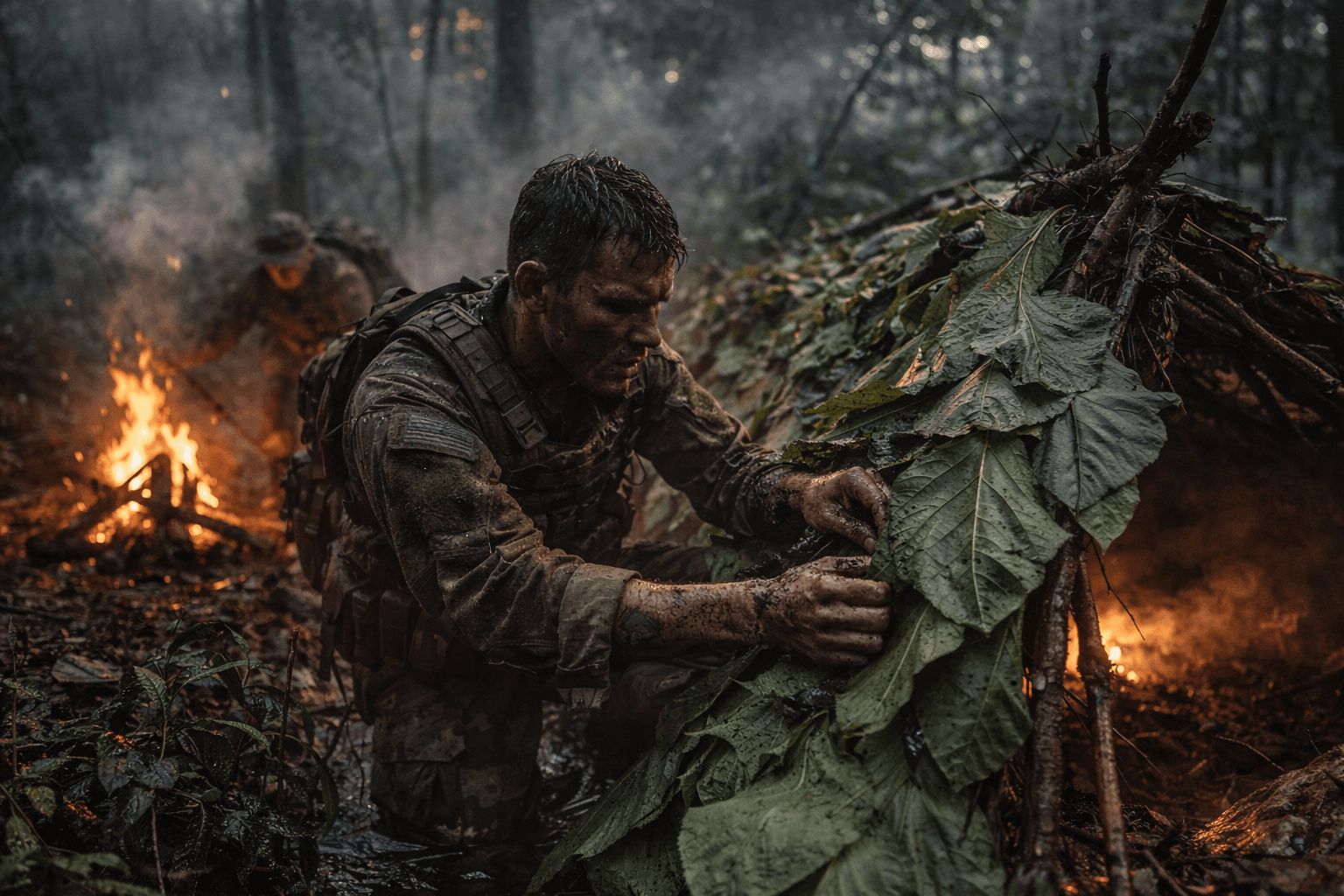
The first phase of SERE focuses on survival in extreme conditions. This is where the illusion of modern warfare disappears. There is no supply chain, no infrastructure, no guarantee of rescue.
Personnel are trained to: locate and purify water in hostile environments, identify edible resources, construct shelters using minimal materials, regulate body temperature under extreme heat or cold
The objective is not efficiency. It is endurance. Survival training is deliberately designed to simulate exhaustion, hunger, and uncertainty, forcing individuals to make decisions under stress.
Evasion: staying invisible in hostile territory
Once survival is established, the next priority is evasion. Avoiding capture requires discipline and awareness. Movement is restricted, often limited to nighttime. Terrain becomes a tool, used for concealment and protection.
Personnel are trained to: minimize visual and thermal signatures, navigate without electronic systems, avoid leaving tracks or patterns, interpret signs of nearby patrols
In this phase, small errors carry significant consequences. A single mistake can expose a position.
Resistance: maintaining control under capture
If evasion fails, the focus shifts to resistance. This is the most psychologically demanding element of SERE. Training scenarios simulate captivity conditions, including interrogation, isolation, and sustained pressure. Under the US Code of Conduct, captured personnel are expected to provide only limited information and resist attempts at exploitation.
The objective is not to create unbreakable individuals, but to establish control. Even partial resistance can preserve operational security and prevent further damage. This phase has also been the subject of public scrutiny. Elements of SERE training were later adapted, controversially, in real interrogation environments during the early 2000s, raising ethical and legal concerns.
Escape: returning from isolation
The final phase is escape. If an opportunity arises, personnel are expected to act. Training focuses on identifying weaknesses in detention systems, breaking restraints, and moving undetected toward friendly forces.
Escape is not treated as a heroic act, but as a calculated decision. Timing, awareness, and risk assessment are critical. Failure in this phase can have severe consequences, both for the individual and for ongoing operations.
Why SERE matters in modern conflicts
The relevance of SERE has increased in parallel with rising global tensions. From the Middle East to Eastern Europe, the possibility of direct confrontation between state actors remains present.
In such environments, aircrews and special operations forces are among the most exposed. Capture is no longer just a tactical issue. It carries strategic implications, including intelligence compromise and propaganda value. SERE is designed to reduce those risks.
SERE is not about winning battles. It is about surviving defeat. It prepares military personnel for isolation, pressure, and uncertainty. It replaces reliance on systems with reliance on training.
In modern warfare, survival is not a matter of chance. It is a capability developed long before the mission begins.