
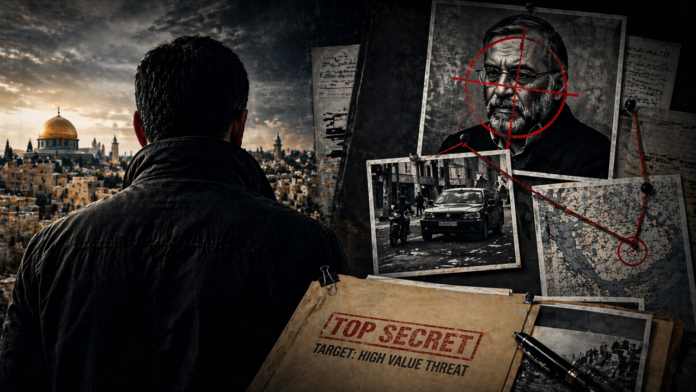
Targeted killings have, for decades, been one of the most debated instruments of Israel’s national security policy. According to international reporting and expert analysis, the external intelligence agency Mossad has played a central role in planning and executing such operations, often beyond Israel’s borders.
This strategy, commonly referred to as “targeted killings,” focuses on individuals considered a direct threat to national security. However, the details surrounding most operations remain classified and are rarely officially confirmed, leaving much of the public understanding based on media reports and indirect disclosures.
From Munich to a doctrine of elimination
The systematic use of targeted killings by Israel is often traced back to the aftermath of the Munich massacre, where 11 Israeli athletes were killed during the Olympic Games.
In response, Israel reportedly launched a covert campaign to track down and eliminate those believed to be responsible. Known widely as “Wrath of God,” the operation spanned several European countries and parts of the Middle East, setting the foundation for a long-term doctrine.
Not all operations were successful. The 1973 Lillehammer affair in Norway, where an innocent Moroccan waiter was mistakenly killed, remains one of the most cited failures, highlighting the risks inherent in such actions.
Modern operations: from field agents to advanced methods
In recent decades, targeted killings have shifted toward strategic figures, including individuals linked to nuclear programs and military structures across the Middle East.
According to multiple reports, several Iranian nuclear scientists were assassinated during the 2010s, though Israel has not officially confirmed involvement. One of the most widely discussed cases is the killing of Mohsen Fakhrizadeh in 2020, a key figure in Iran’s nuclear program. International media suggested Israeli involvement, but this has not been publicly acknowledged.
These operations are believed to combine human intelligence with advanced surveillance technologies and, according to some reports, increasingly sophisticated remote systems.
International cooperation and allied intelligence
Although Mossad is often viewed as highly autonomous, complex operations frequently rely on international cooperation.
Security analyses indicate that intelligence sharing and coordination with agencies such as CIA and MI6 have been important, particularly in the context of counter-proliferation efforts.
However, the extent of direct involvement by allied agencies in targeted killings remains unclear and is often subject to speculation rather than confirmed fact.
A deeply contested legal and ethical debate
Targeted killings remain one of the most controversial issues in international law. Supporters argue that they are a necessary tool to prevent attacks and neutralize imminent threats.
Critics, however, view them as violations of state sovereignty and human rights, especially when conducted outside formally declared conflict zones.
International organizations have repeatedly called for greater transparency and accountability, but the covert nature of such operations makes independent verification extremely difficult.
Effectiveness: tactical success, strategic uncertainty
Many experts agree that targeted killings can be highly effective in the short term. They may disrupt operations, eliminate key figures, and create uncertainty within adversarial networks.
However, their long-term impact is far less clear. Some analyses suggest that removing individuals rarely dismantles entire systems and may even strengthen the resolve of opposing groups.
In this sense, targeted killings function more as a tool of pressure than a definitive solution.
A strategy that remains in the shadows
Today, targeted killings are still believed to be part of Israel’s broader security strategy, even if rarely acknowledged publicly.
For Mossad, this approach represents one of the most direct ways to address perceived threats, but also one of the most politically sensitive, given its potential international consequences.
As tensions in the Middle East persist, one reality remains: the shadow war, where individuals become targets, is unlikely to disappear anytime soon.