
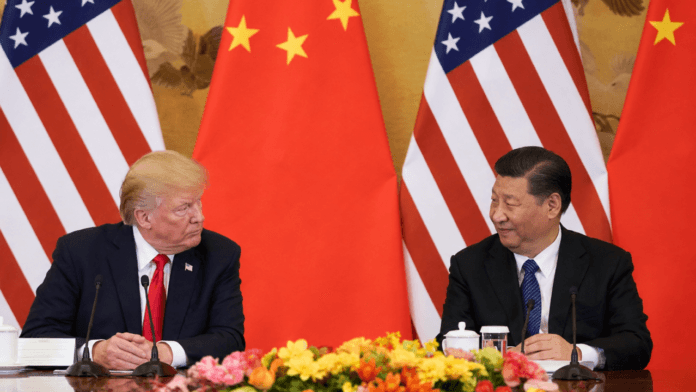
US President Donald Trump claimed that he and Chinese President Xi Jinping are aligned on how the conflict involving Iran should come to an end, as he wrapped up a two day visit to China amid ongoing tensions in the Middle East.
Speaking from the heavily guarded Zhongnanhai compound in Beijing, where China’s top leadership lives and works, Trump said Washington and Beijing share a common view regarding Iran’s nuclear ambitions.
“We feel very similar about how we want it to end. We don’t want them to have a nuclear weapon,” Trump said while appearing alongside Xi Jinping.
However, the US president did not provide concrete details about any joint diplomatic framework or new initiative that could help de-escalate the crisis. It remains unclear whether the talks between the two leaders produced any tangible agreement on Iran or whether the comments were largely political messaging.
China, meanwhile, confirmed that it welcomes the start of dialogue on the Middle East crisis and urged the reopening of the Strait of Hormuz, one of the world’s most strategically important energy corridors.
The Strait of Hormuz remains critical to global oil and gas supplies, with a significant share of the world’s energy exports passing through the narrow waterway every day. Any disruption in the region has the potential to immediately impact global energy prices and wider inflation concerns.
Trump’s visit to China came at a sensitive moment for US-China relations, which in recent years have been defined by trade disputes, technological rivalry and growing geopolitical competition across Asia and the Pacific.
Despite those tensions, both leaders attempted to project an image of cooperation during the summit in Beijing. Xi Jinping described the meeting as “historic,” saying the two countries had reaffirmed “a constructive, strategic and stable China-US relationship.”
Images released from the visit showed Trump and Xi drinking tea together, touring Zhongnanhai and later holding a working lunch alongside senior officials from both delegations.
Trump also attempted to frame the visit as an economic success, claiming the two sides had reached “fantastic trade deals” during his stay in Beijing.
Financial markets, however, reacted cautiously to the announcements. Analysts noted that many of the statements lacked specifics and did not include firm commitments on tariffs, exports or strategic investment agreements.
That has left investors uncertain about the summit’s real impact on economic relations between the world’s two largest economies.
For the Trump administration, the visit also carried major diplomatic significance. The US president has faced international pressure over the handling of tensions with Iran, particularly following military escalations and fears of a broader regional conflict.
China, for its part, has attempted to position itself as a more neutral player in the Middle East, maintaining working relationships with both Iran and Gulf Arab states. Beijing has a direct interest in regional stability due to its heavy dependence on imported energy supplies.
Foreign policy analysts say the public alignment between Trump and Xi may signal an effort to avoid a deeper global crisis, especially if tensions involving Iran continue to affect energy markets and the global economy.
Still, many details remain uncertain. Neither the White House nor Chinese authorities released a detailed joint statement outlining specific next steps following the summit.
Before departing for Washington aboard Air Force One, Trump said he and Xi had “settled a lot of different problems that other people wouldn’t have been able to solve.”
Whether the visit will produce long term results for US-China relations or the Iran crisis remains to be seen.