
Iran has entered negotiations with the United States in Pakistan while insisting it will not compromise on what it describes as core national rights, according to statements from Iranian officials.
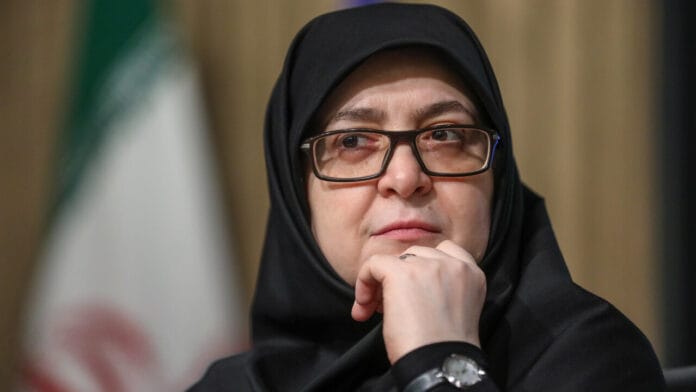
Government spokesperson Fatemeh Mohajerani said Tehran is participating in the talks from a position of caution and firmness. “We will not give up our rights,” she said, adding that Iran does not trust the US side and will approach the negotiations carefully, according to remarks reported by IRNA.
Details emerging from the Islamabad meeting suggest that Iran has set out several key conditions for moving forward. These reportedly include maintaining control over the Strait of Hormuz, securing war reparations, regaining access to frozen assets held abroad, and achieving a broader ceasefire in the region.
Some of these demands remain contested. A senior US official told CBS News that Washington has not agreed to release any Iranian funds, contradicting earlier reports. The White House has also not confirmed any concessions publicly.
On the US side, Vice President J. D. Vance held a bilateral meeting with Pakistani Prime Minister Shehbaz Sharif, as confirmed by official sources. The discussions are part of broader diplomatic efforts hosted in Islamabad.
The American delegation attending the talks reportedly includes senior figures such as Steve Witkoff and Jared Kushner, indicating a high-level engagement from Washington.
Meanwhile, the Iranian delegation is led by Mohammad Bagher Ghalibaf, who also met with Sharif during the visit. Iranian state media reported that members of the delegation brought with them images and items described as evidence from a recent attack in Minab. The claims, which refer to civilian casualties including children, have not been independently verified.
Pakistan is positioning itself as a central mediator in the talks. A source within the country’s foreign ministry said a Chinese delegation is expected to arrive in Islamabad to support mediation efforts, although China has not officially confirmed its involvement.
In parallel, Pakistan has reportedly invited Saudi Arabia to send a diplomatic delegation to observe or support the negotiations, reflecting a broader regional effort to stabilise the situation.
The talks come at a critical moment, with both geopolitical tensions and economic risks at stake. While negotiations have begun, there is little indication so far of a breakthrough, as both sides appear to be holding firmly to their positions.
For now, the outcome remains uncertain, with diplomacy continuing under pressure and expectations tempered by deep divisions between the two sides.