
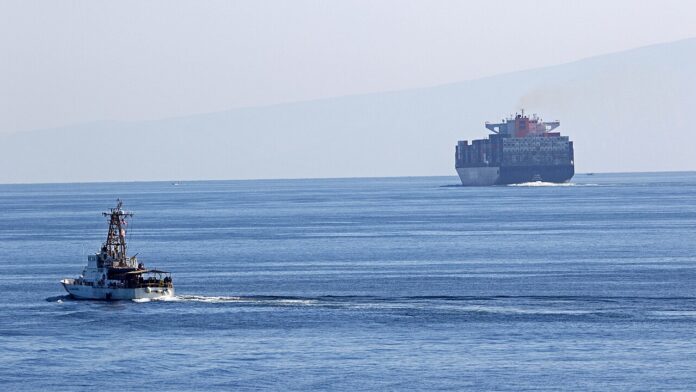
Iran has reportedly taken a step with potentially far-reaching consequences for global energy markets, with state media claiming the Strait of Hormuz has been fully closed. The development, reported by Press TV, cites maritime tracking data indicating sudden disruptions to tanker movements in the area.
According to these reports, several oil tankers have altered course, while one vessel identified as “AUROURA” reportedly executed a sharp 180-degree turn near the Musandam Peninsula, retreating back into the Gulf rather than exiting the strait. If confirmed, such movements would point to a significant disruption along one of the world’s most strategically vital shipping lanes.
However, the situation remains unclear, and there has been no independent international confirmation that the strait has been fully closed. Iranian authorities have not issued a direct, formal statement explicitly confirming such a move, and global monitoring agencies continue to assess vessel activity in the region.
The Strait of Hormuz, located between Iran and Oman, serves as a critical artery for the global energy supply, with a substantial share of the world’s oil exports passing through it. Any disruption in this corridor typically triggers immediate concerns over supply security and price volatility in international markets.
Reports from the Iranian news agency Fars suggest that tanker traffic has slowed or halted alongside an escalation in Israeli strikes in Lebanon, which Tehran has described as unacceptable. The timing has raised questions about whether the reported maritime disruption is linked to broader regional military developments.
At the same time, a fragile ceasefire arrangement between the United States and Iran appears to be under pressure. US President Donald Trump said earlier that a two-week pause in hostilities had been agreed, contingent on Iran ensuring the immediate and secure reopening of the Strait of Hormuz.
Iran’s Foreign Minister Seyed Abbas Araghchi, for his part, has stated that Tehran is prepared to guarantee safe passage during the ceasefire period in coordination with its armed forces. He added that what Iran describes as “defensive operations” would cease only if attacks against the country also stop.
The conditional nature of these statements suggests that the ceasefire remains fragile, with a high risk of escalation if either side perceives violations of the agreement. Security analysts warn that even limited incidents in the Strait of Hormuz could have outsized consequences for both regional stability and the global economy.
More broadly, the latest developments highlight a recurring dynamic in the Middle East, where local conflicts intersect with global strategic interests. Control over key maritime routes and energy flows remains central to this geopolitical landscape.
International reactions are expected to intensify in the coming hours and days, as governments and markets seek clarity on whether this is a temporary disruption or a more sustained shift in Iran’s posture.
For now, the situation remains fluid, with limited verified information and significant uncertainty surrounding both the immediate and longer-term implications.