
Iran’s Deep Underground “Pickaxe Mountain” Nuclear Site Near Natanz Emerges as Strategic Target in Effort to Contain Tehran’s Atomic Program
Analysts say dismantling Iran’s deepest underground enrichment facility could require special forces if airstrikes fail to penetrate the heavily fortified complex.
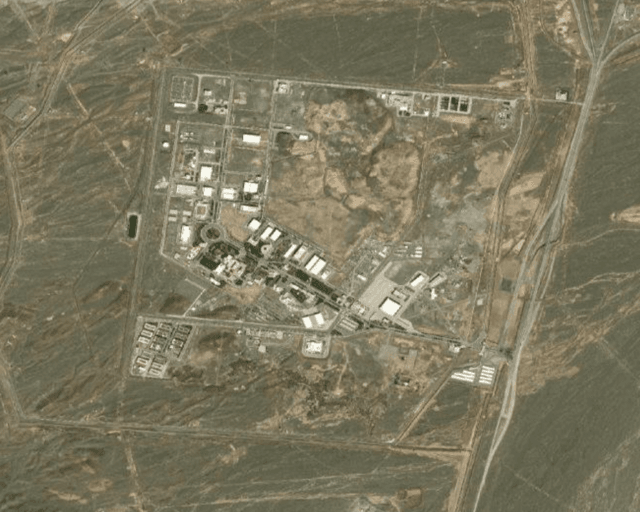
A highly secretive Iranian nuclear installation buried deep beneath a mountain near the city of Natanz has emerged as a potential focal point in efforts to curb Tehran’s nuclear capabilities as tensions and military operations continue across the region.
Western intelligence sources say the facility, known by the codename “Pickaxe Mountain,” lies more than 100 meters underground, making it significantly deeper than the Fordow uranium enrichment site, which was struck by U.S. forces during operations last summer.
Despite a series of U.S. and Israeli airstrikes during last year’s 12-day conflict, analysts believe Iranian authorities have since reinforced several key nuclear installations, allowing much of the country’s nuclear infrastructure to remain operational.
U.S. President Donald Trump has repeatedly stressed that preventing Iran from developing nuclear weapons remains a central strategic objective. Intelligence estimates suggest Iran currently holds more than 400 kilograms of uranium enriched to 60%, material that experts say could be further processed to produce at least 11 nuclear weapons.
Western analysts believe the stockpile of enriched uranium is likely distributed between facilities in Fordow and the nuclear complex in Isfahan.
At the same time, the Foundation for Defense of Democracies (FDD) reports that construction of a new enrichment plant has been underway since 2020 at the Pickaxe Mountain site, located roughly one mile from the Natanz nuclear facility.
The secrecy surrounding the project became apparent during a recent exchange involving Rafael Grossi, Director General of the International Atomic Energy Agency (IAEA), who reportedly received no substantive response from Iranian authorities after requesting information about activity at the location.
Andrea Stricker, deputy director of FDD’s nonproliferation program, argues that military operations targeting Iran’s nuclear infrastructure cannot be considered successful unless the underground site is secured.
“Neutralizing the fortress and securing or eliminating the stockpile of highly enriched uranium must occur before major combat operations conclude,” Stricker said in comments cited by the New York Post.
With Iran’s nuclear infrastructure showing resilience against repeated aerial bombardment, some analysts say ground operations involving special forces may ultimately be required to dismantle the underground complex.
Trump has not ruled out such a scenario.
“At some point we could do it. We haven’t done it now, but we might later,” he told reporters last weekend.
Meanwhile, last week’s strike on the Taleghan facility could signal the beginning of a new operational phase. Annika Ganzeveld of the American Enterprise Institute said extensive damage to Iranian defensive systems and missile launchers may now open the way for the United States and Israel to target the core infrastructure of Tehran’s nuclear program more directly.