
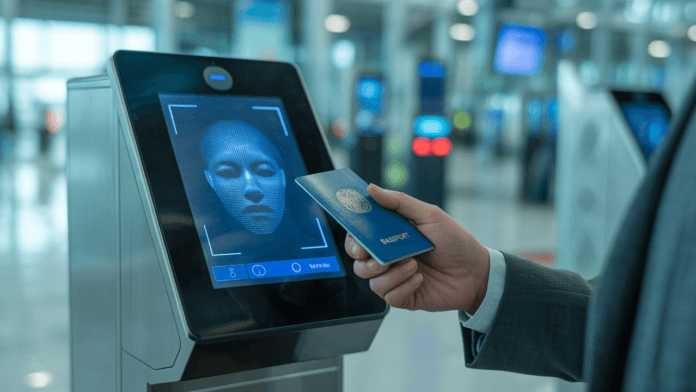
The European Union is moving closer to launching its long-delayed Entry/Exit System (EES), a digital border control mechanism that will automatically record the movements of travellers from outside the bloc. The system is expected to come into force in 2026, although officials have not confirmed a final date.
The EES will apply to all non-EU nationals entering the Schengen Area for short stays, typically up to 90 days within a 180-day period. It is designed to replace the current practice of manually stamping passports, introducing a fully electronic system that tracks both entry and exit in real time.
According to EU officials, the system will collect biometric data, including fingerprints and facial images, at the point of entry. This information will be stored securely and used to verify identities during subsequent crossings. However, details about data storage duration and safeguards have not been fully clarified, and some privacy advocates have raised concerns that have not been independently addressed.
The rollout of EES has been years in the making, with multiple delays linked to technical readiness and coordination across member states. The system is part of a broader effort by the EU to modernise its external borders and improve oversight of visitors entering the bloc.
One of the central goals is to better enforce the “90/180 rule,” which limits how long non-EU travellers can remain within the Schengen zone. Currently, overstays can be difficult to detect due to inconsistent stamping practices. Officials say the new system will close that gap by automatically calculating permitted stays and flagging violations.
Beyond immigration control, the EES is also being positioned as a security tool. By maintaining a comprehensive digital record of border crossings, authorities aim to strengthen checks against irregular migration and cross-border crime. Still, the extent to which the system will enhance security in practice remains a subject of debate among analysts.
Travellers can expect noticeable changes at border crossings once the system becomes operational. First-time users will likely undergo a more detailed registration process, including biometric capture, which could increase waiting times at airports and land borders. Subsequent entries are expected to be faster, as travellers’ data will already be stored in the system.
The EES will also operate alongside another upcoming EU initiative, ETIAS, a pre-travel authorisation system for visa-exempt travellers. While the two systems serve different functions, they are designed to work together, creating a layered approach to border management. ETIAS approval will be required before travel, while EES will record movements at the border.
Despite its technical ambitions, the introduction of EES has raised broader questions about data protection and the balance between security and privacy. Civil society groups have called for greater transparency on how biometric data will be handled, who will have access to it, and how long it will be retained.
For governments within the EU, however, the system represents a significant upgrade to border infrastructure. It reflects a shift towards automation and data-driven controls, aligning Europe with similar systems already in place in countries such as the United States.
As the launch approaches, travellers from outside the EU are being advised to prepare for a different border experience, one that relies less on paper documentation and more on digital identity verification.