
The United Kingdom and France are hosting a multinational meeting in London aimed at addressing the situation in the Strait of Hormuz, a vital global energy corridor that has reportedly been largely closed for weeks due to escalating regional tensions.
The meeting, taking place at the Northwood military headquarters in north London, brings together representatives from more than 30 countries. According to the UK Ministry of Defence, discussions are focused on practical ways to reopen the waterway, including military coordination, command structures, and the possible deployment of forces in the region.
British officials have stressed that any military action would depend on diplomatic developments and the achievement of a sustainable ceasefire. Details of any potential operational plans remain unclear and have not been publicly confirmed.
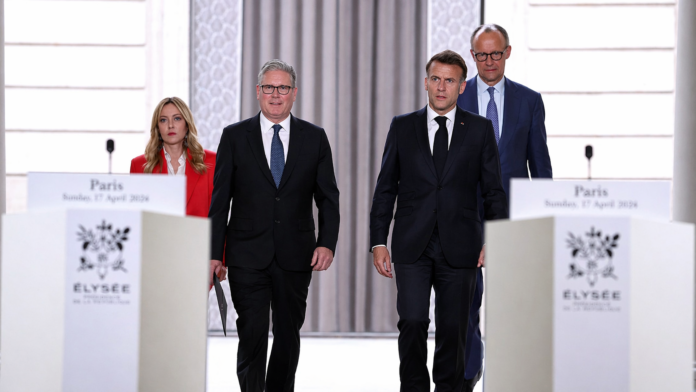
The gathering follows an earlier virtual summit led by UK Prime Minister Keir Starmer and French President Emmanuel Macron, which included participation from around 50 countries. Officials said the aim is to establish a multinational mission described as “independent and strictly defensive,” designed to safeguard maritime security without escalating the conflict further.
UK Defence Secretary John Healey stated that the priority is to translate diplomatic consensus into a concrete operational framework. He emphasized that any action should focus on ensuring freedom of navigation and supporting long-term regional stability.
The Strait of Hormuz remains one of the world’s most critical energy chokepoints, linking the Persian Gulf to global markets. Roughly a fifth of the world’s oil supply passes through the narrow waterway, making its security essential for global economic stability.
According to international reports, the situation deteriorated after Iran moved to restrict access to the strait in response to strikes carried out by United States and Israel. However, the full extent of the disruption and its precise impact on maritime traffic remain unclear and have not been independently verified.
Maritime security experts warn that any military intervention in the area carries the risk of further escalation, particularly at a time when relations between regional and global powers remain fragile.
Meanwhile, global energy markets have reacted to the developments, with oil prices showing volatility amid concerns over supply disruptions. Analysts say that any prolonged blockage of the strait could have direct consequences for economies heavily dependent on energy imports.
For now, there is no clear timeline for when the Strait of Hormuz might fully reopen. The London talks are expected to continue over two days, as participating countries attempt to balance pressure for action with the need to avoid a broader conflict.
Future developments are likely to depend not only on military planning but also on diplomatic progress, which remains central to any lasting solution in one of the world’s most sensitive geopolitical regions.