
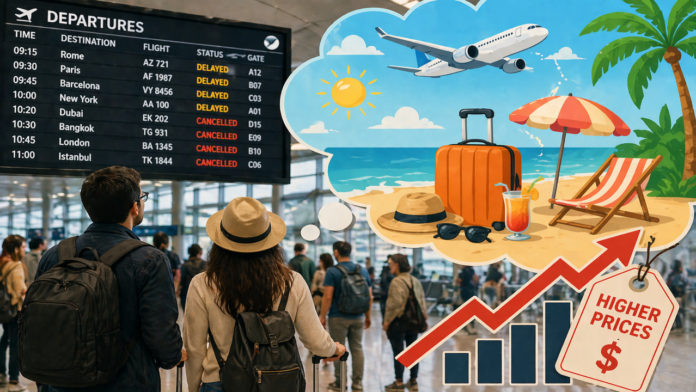
Air travel costs are expected to rise as the conflict involving Iran continues to disrupt global oil markets, according to a new analysis by Transport & Environment.
The study suggests that higher jet fuel prices are already increasing the cost of flights departing from Europe. On average, passengers on long-haul routes could see fuel-related costs rise by around €88 per ticket, while short-haul flights within Europe may increase by roughly €29.
Specific routes highlight the impact. A flight from Barcelona to Berlin now carries an estimated additional fuel cost of €26 per passenger, while a long-haul journey from Paris to New York could cost €129 more due to higher fuel prices.
The figures are based on a comparison of fuel prices before and after the escalation of tensions involving the US, Israel and Iran earlier this year. However, the analysis has not been independently verified.
Airlines are facing mounting pressure as jet fuel prices have remained above $100 per barrel since the conflict intensified. Industry executives have warned that these increased costs are likely to be passed on to passengers if supply disruptions persist.
Major European carriers, including Lufthansa, Ryanair and Air France-KLM, have previously indicated that prolonged instability in the Strait of Hormuz could force them to raise ticket prices.
There are also concerns about potential flight disruptions if fuel shortages worsen. European authorities are expected to issue guidance on managing limited jet fuel supplies, as the aviation sector braces for a difficult summer season.
Diane Vitry said the situation highlights a broader vulnerability in global energy dependence. She argued that reliance on imported oil, rather than environmental regulations, poses the greater risk to the aviation sector.
Airlines, meanwhile, have renewed calls to ease some EU climate policies, including targets for sustainable aviation fuel and planned carbon pricing measures. They argue that additional regulatory costs could further strain the industry during a period of rising fuel prices.
The European Union has so far signaled it will continue pushing for energy independence, including increased investment in sustainable aviation fuels.
Not all carriers are equally exposed. Some UK-based airlines have been partially shielded from immediate price volatility through fuel hedging strategies, where fuel is purchased in advance at fixed prices.
Despite this, analysts warn that if tensions in the Middle East persist, travellers across Europe are likely to face higher fares in the coming months.